Palm Vein Technology

The credential is under the skin, and it never leaves the terminal.

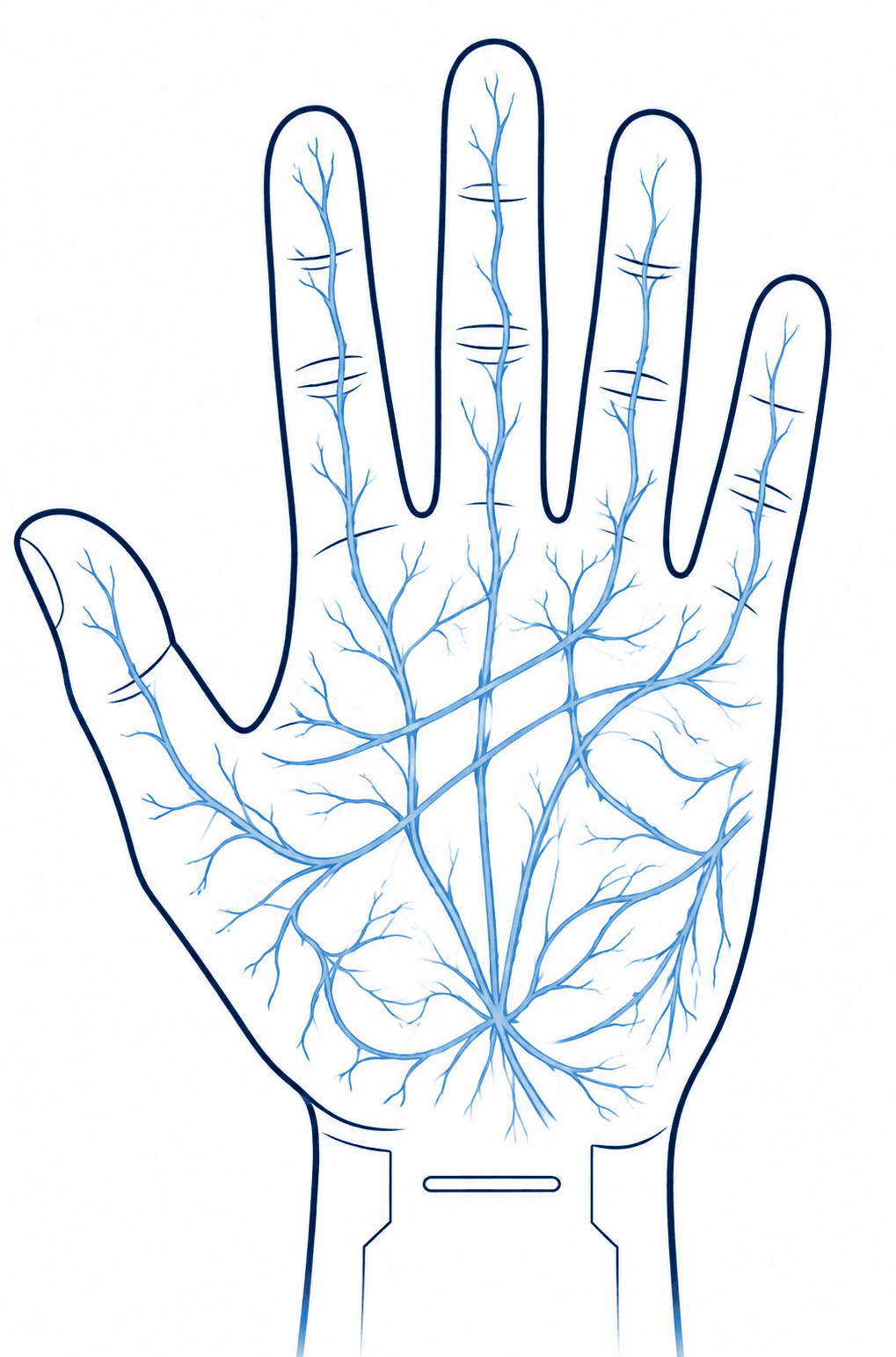
PalmPay reads the vascular pattern inside the palm with near-infrared light, isolates it on the device, and converts it into an irreversible template. The raw image is destroyed at the edge. Everything below is the chain that makes that possible.

Optical window
700-900 nm
Gate verification
<1.0 s
Capture distance
5-15 cm
Line illustration of a palm showing the sub-dermal vein pattern used for identification

Where the work happens

The decision is computed on the counter, not in a datacentre.

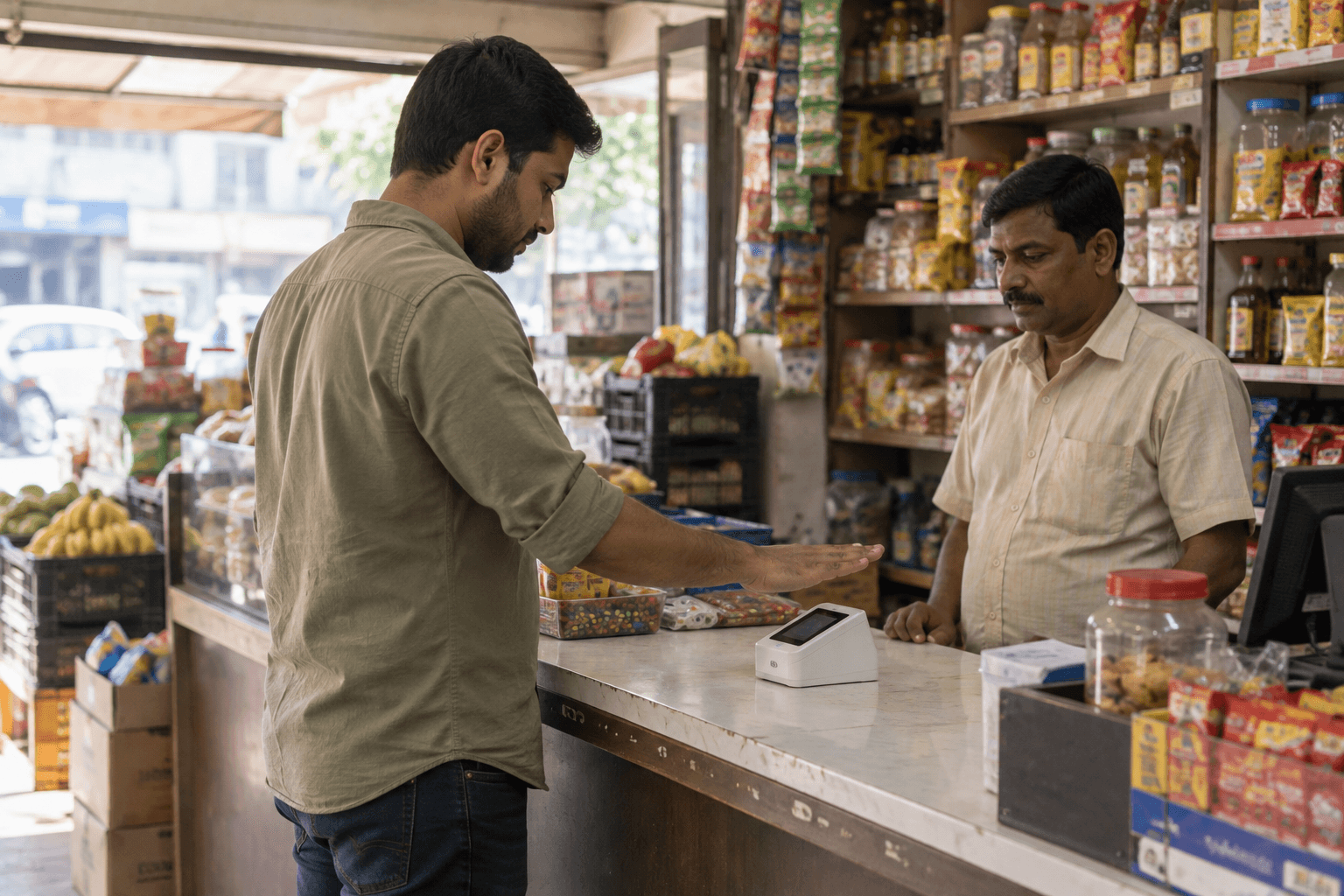
Recognition runs on the terminal itself. That is an architectural choice with two consequences a reviewer should hold us to: nothing that could identify a person has a network path off the device, and a site with an unreliable uplink still verifies people in under a second.

Customer hovering a palm over a counter terminal at a kirana store

Why now

The credentials India relies on are being defeated faster than they’re replaced.

None of this is our own telemetry. Each figure below is publicly reported, with the source stated under it.

~10x

rise in reported cyber-fraud losses in India, 2022 to 2024

Ministry of Home Affairs, data tabled in Parliament

85%

year-on-year increase in domestic UPI fraud cases, FY23 to FY24

Finance Ministry, Lok Sabha reply, November 2024

47%

of Indian adults have experienced, or know someone who has experienced, an AI voice or deepfake scam

McAfee, 2023 consumer survey

2,290 Cr20227,465 Cr202322,846 Cr2024

Reported cyber-fraud losses

Losses more than tripled between 2022 and 2023, and roughly tripled again between 2023 and 2024. That is a trend line moving faster than manual verification can keep up with.

Ministry of Home Affairs, data tabled in Parliament

The alternatives

Every other credential fails on a different mechanism.

Face, iris and fingerprint are not wrong technologies. Each solves a real problem elsewhere. None of them was built for a device-free, high-throughput, industrial-grade Indian deployment.

01

Face and video KYC

A face is a public, outward-facing credential: it is on every ID card and photo online, and now reproducible by generative tools that cost under $50 a month. Liveness checks built to catch a mask or a printed photo are being defeated by models that replicate blink and micro-movement, the exact deepfake pattern Indian banks are now seeing at onboarding.

02

Iris

Accurate, but it needs a cooperative subject, a controlled distance and near-infrared illumination precise enough that dust, glare or a tilted head causes a rejection. Expensive to deploy at a shop-floor gate or a retail counter, and not built for the throughput a shift change or a queue demands.

03

Fingerprint

The credential lives on the surface: it wears down with manual labour, degrades with grime, moisture and callusing, and, unlike a vein pattern, can be lifted and replicated from a print left on any surface the finger has touched.

04

Palm vein

The pattern sits beneath the skin and needs live blood flow to read at all, so it is not something a photograph, a mould or a lifted print can reproduce. Unaffected by surface wear, grime or moisture, and the same contactless gesture works at a checkout counter and a factory turnstile.

Send this to your security review.

We will walk your security, compliance and operations teams through the pipeline, the template format and the pilot deployment plan, and answer the questions these pages do not.